
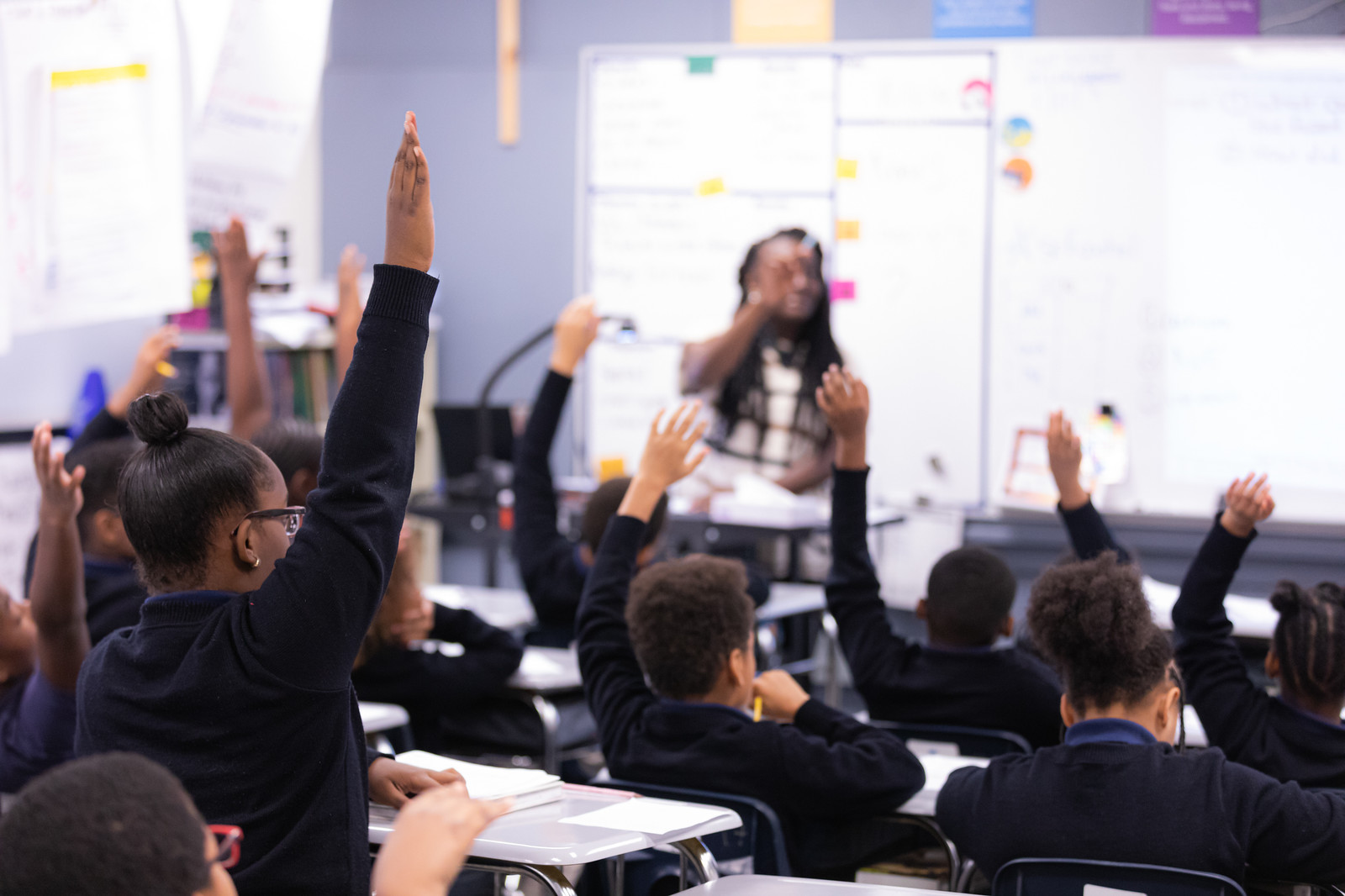
Te gen sis mo majik. Sis mo ki te siyale Amani, yon elèv nan klas senkyèm Ebony a, t ap pare pou konsantre nèt.
“Madam Lawhorn, èske ou ka verifye sa a?”
Lè Ebony te nan lekòl mwayen, li sonje li te lite pou kòmanse ekri devwa yo—li pa t konnen fòs pwòp vwa li, ni menm si li te gen youn. Kòm yon pwofesè, li te konnen bagay yo te dwe diferan pou elèv li yo. E sa te vle di sa li t ap di Amani ta pral fè tout diferans lan.
Nan yon moman kote anpil nan nou ap eseye jwenn fason pou nou repwodui ansèyman an pèsòn sou yon distans, li itil pou nou sonje ke youn nan bagay ki pi pwisan nou ka fè kòm pwofesè pa bezwen fèt nan yon sal klas fizik ditou.
Jan Amani ta ka di w, nan klas Ebony, fidbak se pa repons pou sa elèv yo ekri—se sa ki pouse l.
Fason nou pale ak elèv yo fè yo sonje egzakteman kiyès nou panse yo ye, sa ki montre lafwa ak konfyans nou genyen nan kapasite yo.
“"Kòmantè li te ogmante konfyans mwen," rapòte Amani. "Mwen te chita la an kachèt san m pa t panse sa m te ekri a te kòrèk, men apre sa mwen te ale rankontre avè l youn-a-youn e kòmantè li te fè m reyalize ke mwen te vrèman ap fè byen e mwen te kapab fè sa."”
Kreye yon patenarya aprantisaj
Kijan nou kreye atmosfè sa a? Youn nan fason se konsidere chak chans pou bay fidbak kòm opòtinite pou bati yon patenarya aprantisaj—oswa jan Zaretta Hammond li rele l, yon alyans. Hammond fè agiman ke fidbak ki baze sou byen se:
- Ki ka aplike
- Espesifik e nan bon dòz la (konsantre sou 1-2 bagay)
- Alè
- Fèt nan yon anviwònman ki pa bay presyon epi ki bay sipò.
Sa te rezone pou nou kòm yon mak pwogram nou te travay pou bati nan Uncommon: youn ki nouri kwasans elèv yo epi pouse yo vin pi bon vèsyon tèt yo kòm ekriven. Jan Hammond note, "Kontrèman ak sa nou ka panse, senpleman bay fidbak pa inisye chanjman. … Ou dwe kapab antre an konvèsasyon ak elèv k ap eseye depase limit yo."“
Kidonk, kijan sa ta ka parèt? Men yon egzanp sou kalite fidbak ekri ou ta jwenn sou papye Amani a, ki pran eleman nan ekriti Hammond sou ansèyman ki reponn ak kilti:
Bon travay pou chwazi prèv ki lye sere ak reklamasyon ou! Kòm yon ekriven, yon bagay ou ta ka eseye apre se fè koneksyon sa a klè nan analiz ou. Apre ou fin prezante prèv ou, eseye revize fraz ou yo pou yo reponn kesyon "e apre sa?" Mwen eksite pou m wè w abòde pwochen etap sa a!


 Haitian Creole
  English
  Arabic
  Chinese
  French
  Portuguese
  Spanish