

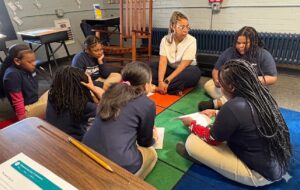
Social workers at Uncommon Schools juggle guiding students through the pressures of academics, social challenges, and crises. Today, social workers are getting help from an AI-powered lesson-planning assistant that supports the design and delivery of high-quality, student-centered social-emotional learning (SEL).
On any given day, Uncommon social workers move between one-on-one counseling, small group facilitation, classroom lessons, and urgent needs that cannot wait. Their work is deeply relational, constantly shifting, and essential to student success. For the past two years, Lenny Learning has streamlined preparation behind the scenes by protecting capacity so social workers can spend less time planning and more time fully present for the students who rely on them.
The Challenge
While the impact of social workers is undeniable, the structure of the work presents real challenges:
- A multi-faceted role with competing demands. Social workers’ schedules are often driven by immediate student needs, leaving limited time to design structured SEL lessons efficiently.
- Measuring progress in SEL isn’t as straightforward as measuring academic progress. Unlike academic instruction, social-emotional growth is harder to quantify. Without clear lesson plans, student reflections, or assessments, documenting impact and tracking progress over time can be difficult.
- There is no single curriculum that meets all students’ SEL needs. Students differ by age, identity, learning profile, and circumstance. Creating individualized, student-centered interventions from scratch requires time and capacity that are often in short supply.
The Opportunity
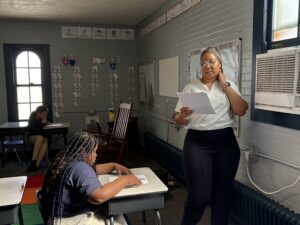
We introduced Lenny Learning to our Rochester Prep schools first in seven campuses to directly address these challenges. The platform allows social workers to generate complete, research-based SEL lesson plans in minutes. Over 2,000 lessons and supplementary materials have been created over the past year, and there are now over 40 educators on the Rochester Prep team using this platform to support students, both with social-emotional needs and with academic support.
By entering details such as student age, group size, topic, and context, social workers can quickly receive structured lessons that include:
- Clear objectives and activities
- Student-centered discussion prompts
- Built-in reflection questions and assessments
- Visual supports are appropriate for different age levels and learning needs.
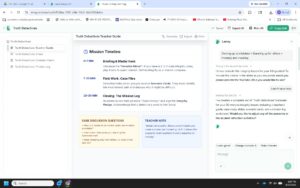
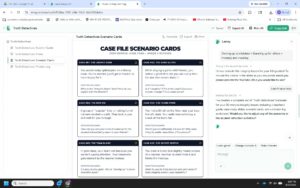
A social worker can use prompts such as “Example Prompt,” and Lenny Learning will provide resources, including the lesson plan, visuals, and assessment you see here.
Lenny Learning does not replace the social workers’ professional expertise. It serves as a planning tool that helps social workers spend less time building materials and more time working directly with students.
 成果
成果
Lenny Learning’s implementation has expanded to our other regions, Camden, New York City and Boston, with several meaningful outcomes:
Time Savings: Social workers report significant time savings, with lessons that once took weeks to develop now taking minutes to create. This efficiency allows teams to respond more quickly to emerging needs such as truancy trends, bullying concerns, or social media-related challenges. In recent surveys, 100% of social workers report that they’ve found it beneficial in planning content for students.
“I use Lenny every day in the work I do with students! Whether I am planning a counseling curriculum or need a quick on-the-fly lesson, it has cut my prep time in half. It is clear that Lenny evolves to meet the needs of the staff using it, and I am very pleased with the current updates. The time I have saved in lesson planning has allowed me more face time with students.”
—Christy Olivieri, Social Worker, Rochester Prep St. Jacobs Elementary School
Student-Centered Approach to SEL: Lenny Learning reinforces a student-centered, non-punitive approach to SEL. Lessons emphasize skill-building, reflection, and empathy, helping students understand the impact of their behavior and develop tools for growth, rather than simply responding to consequences.
“Lenny has made prep work for my sessions with students much easier and more efficient. Eliminating this time has made it easier for me to connect with more students while still having quality counseling lessons with those who need it.”
-Megan Cilano – St. Jacobs Middle School Social Worker
Collaboration: The shared lesson database allows social workers to save, adapt, and build on resources created by colleagues–both within their schools and across Uncommon’s regions. When common themes emerge, such as social media use, bullying, or emotional regulation, teams can learn from one another rather than starting from scratch. This supports consistency while still allowing lessons to be tailored to individual student needs.
Assessments: SEL work is now more visible and measurable. Lesson plans, student work products, reflections, and assessments provide concrete artifacts that social workers and school leaders can use to assess progress, identify trends, and refine interventions over time.
下一步工作
As we continue to learn from the implementation of Lenny Learning across Uncommon Schools, we are exploring additional ways the platform can more broadly support educators and students.
Academic Interventions: Uncommon is beginning to explore Lenny Learning’s academic lesson-planning features, particularly for special education teachers who support students across content areas and learning profiles. The platform has the potential to reduce planning time while supporting more individualized instruction.
Parent and Family Communication: We are also examining how the platform can support clearer, more consistent communication with families by helping educators create accessible parent-facing resources that reinforce learning and social-emotional skills at home.
Curriculum Planning for Self-Contained Classrooms: For smaller classrooms, supporting students with differentiated learning needs and abilities. classrooms, where the by-the-book curriculum can fall short, Lenny Learning may support more flexible lesson planning that reflects students’ specific needs without adding to educator workload.
Whole-School Assessments: Teams are also exploring how the platform can support the creation of schoolwide social-emotional or academic assessments—short surveys or reflection tools that help schools take a pulse, monitor trends, and respond proactively.
Social-emotional learning is foundational to student success, but sustaining it requires systems that support the adults doing the work. By adopting Lenny Learning, Uncommon Schools’ educators and students are supported.
 Chinese
  English
  Arabic
  French
  Portuguese
  Spanish
  Haitian Creole